
Define Agent Boundaries Before Adding Tools
Start with a narrow user outcome, explicit tool permissions, and visible handoff points before building a capable agent.
Learning objectives
- Distinguish an agent goal from a tool capability
- Specify least-privilege tool access
- Design a human handoff for uncertain or high-impact actions
ToolDix original visual
Frame
Name the outcome and constraints.
Build
Try one bounded workflow.
Review
Keep evidence, revise, and share.
Start with one completed outcome
An agent is useful when it can move a task through several steps while remaining observable. Begin with one outcome such as "prepare a cited support brief for review," not "answer every support question." The narrower statement exposes the tools, information, and approvals the workflow truly needs.
Give tools explicit contracts
For every tool, document what the agent may read, write, or send. State the input shape, the expected output, rate limits, and failure behavior. A search tool may retrieve public pages; it should not silently publish a summary. A calendar tool may draft an event; it should request approval before creating it.
Practice: draw the stop points
Map the workflow as input, reasoning step, tool call, result, and handoff. Mark where the agent must stop because the result is uncertain, sensitive, irreversible, or expensive. Those stops are product requirements, not a sign that the agent failed.
Common mistake
Do not give an early agent broad credentials to compensate for missing design. More access can make a demo look capable while making a real workflow less safe and harder to debug.
Sources and license context
These references informed the lesson. ToolDix adds its own explanation, workflow, and practice rather than reproducing source material.
- Microsoft AI Agents for Beginners (MIT)
- Hugging Face Agents Course (Apache-2.0)
Take it further
Use a primary source to deepen this lesson.
Each recommendation is a direct link to the publisher or author. The study prompt is ToolDix editorial guidance, not copied course content.
Hands-on lab
LLM Course
Complete the pipeline exercise, then write down what information disappears when text becomes tokens.
Open original source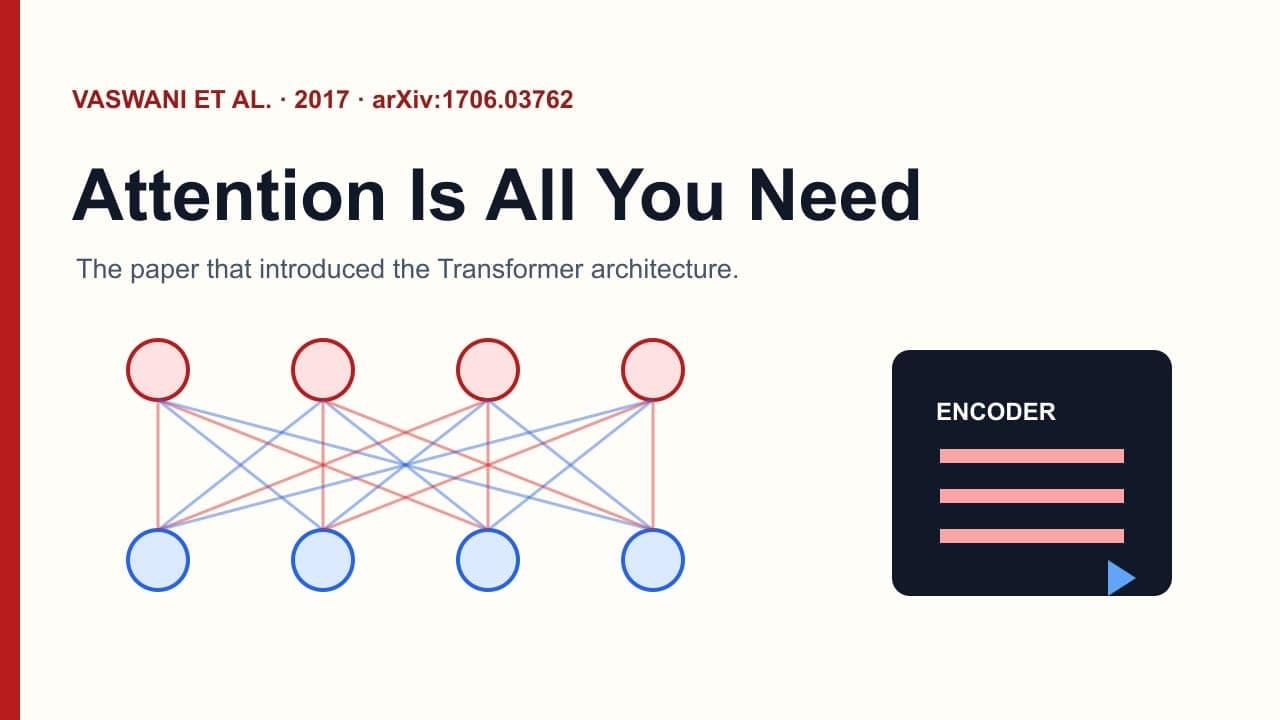
Classic reading
Attention Is All You Need
Read the abstract and architecture figure first; annotate what information flows between tokens.
Open original source
Course
AI Agents Course
Before using a framework, write down one tool contract and the exact state an agent is allowed to change.
Open original source