
Evaluation, Tracing, and Guardrails
Build evidence that an agent is safe and useful through test datasets, traces, policy checks, and human review.
Learning objectives
- Create task-level and safety-level evaluation cases
- Trace model, tool, state, and approval events
- Put guardrails in code and policy rather than prompts alone
ToolDix original visual
Frame
Name the outcome and constraints.
Build
Try one bounded workflow.
Review
Keep evidence, revise, and share.
What to evaluate
Measure task completion, groundedness, tool-call accuracy, latency, cost, policy violations, and recovery behavior. A single aggregate score hides failure modes. Segment results by task type and risk level.
A useful trace
Record request ID, model version, prompt version, state transition, tool inputs after redaction, tool outputs, approvals, retries, and final outcome. Traces must be protected because they can contain sensitive operational information.
Guardrails in layers
Input validation, access control, tool schemas, output checks, rate limits, human approval, and monitoring are separate layers. A model instruction is only one layer and should never be the sole control for money, identity, or data access.
Practice: red-team matrix
Test prompt injection, tool misuse, data exfiltration attempt, unauthorized action, hallucinated citation, and retry storm. For each, record expected behavior and which layer catches it.
Common mistake
Do not evaluate only on successful demos selected by the builder.
Sources and license context
These references informed the lesson. ToolDix adds its own explanation, workflow, and practice rather than reproducing source material.
- OpenAI Agents SDK (Repository terms apply)
Take it further
Use a primary source to deepen this lesson.
Each recommendation is a direct link to the publisher or author. The study prompt is ToolDix editorial guidance, not copied course content.
Hands-on lab
LLM Course
Complete the pipeline exercise, then write down what information disappears when text becomes tokens.
Open original source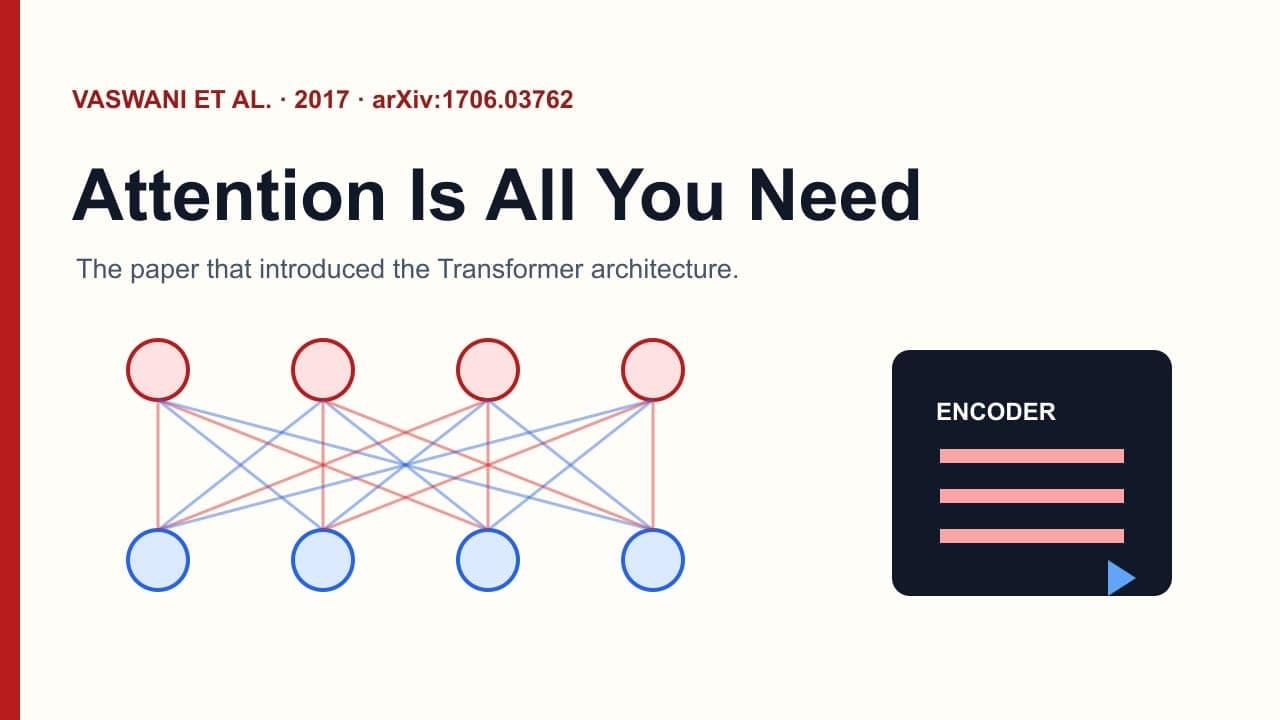
Classic reading
Attention Is All You Need
Read the abstract and architecture figure first; annotate what information flows between tokens.
Open original source
Course
AI Agents Course
Before using a framework, write down one tool contract and the exact state an agent is allowed to change.
Open original source