
Test an Agent Workflow Before You Trust It
Build scenario tests for normal, incomplete, adversarial, and tool-failure inputs so an agent has measurable behavior.
Learning objectives
- Define agent scenarios beyond the happy path
- Test tool failures and approval boundaries
- Record traces that support debugging and review
ToolDix original visual
Frame
Name the outcome and constraints.
Build
Try one bounded workflow.
Review
Keep evidence, revise, and share.
Test behavior, not just final prose
An agent can produce a polished final answer while calling the wrong tool, skipping a required check, or inventing a source. A useful test therefore checks the path as well as the output. Capture the task, tool calls, retrieved evidence, decisions, and final response.
Use four scenario families
Start with a normal request. Add an incomplete request that requires clarification, a hostile request that attempts to override the task, and a tool failure such as a timeout or empty result. For each, define the expected action: proceed, ask, refuse, retry within a limit, or hand off.
Practice: write five acceptance cases
For one agent, write five cases with input, available tools, expected tool calls, expected boundary behavior, and a review criterion. Run them whenever you change the prompt, tools, or model. Keep failed traces because they are the fastest route to a stronger design.
Common mistake
Avoid using production data to prove an early agent works. A small synthetic fixture set gives you repeatable tests without exposing private information or making results impossible to compare.
Sources and license context
These references informed the lesson. ToolDix adds its own explanation, workflow, and practice rather than reproducing source material.
- Microsoft AI Agents for Beginners (MIT)
- Hugging Face Agents Course (Apache-2.0)
Take it further
Use a primary source to deepen this lesson.
Each recommendation is a direct link to the publisher or author. The study prompt is ToolDix editorial guidance, not copied course content.
Hands-on lab
LLM Course
Complete the pipeline exercise, then write down what information disappears when text becomes tokens.
Open original source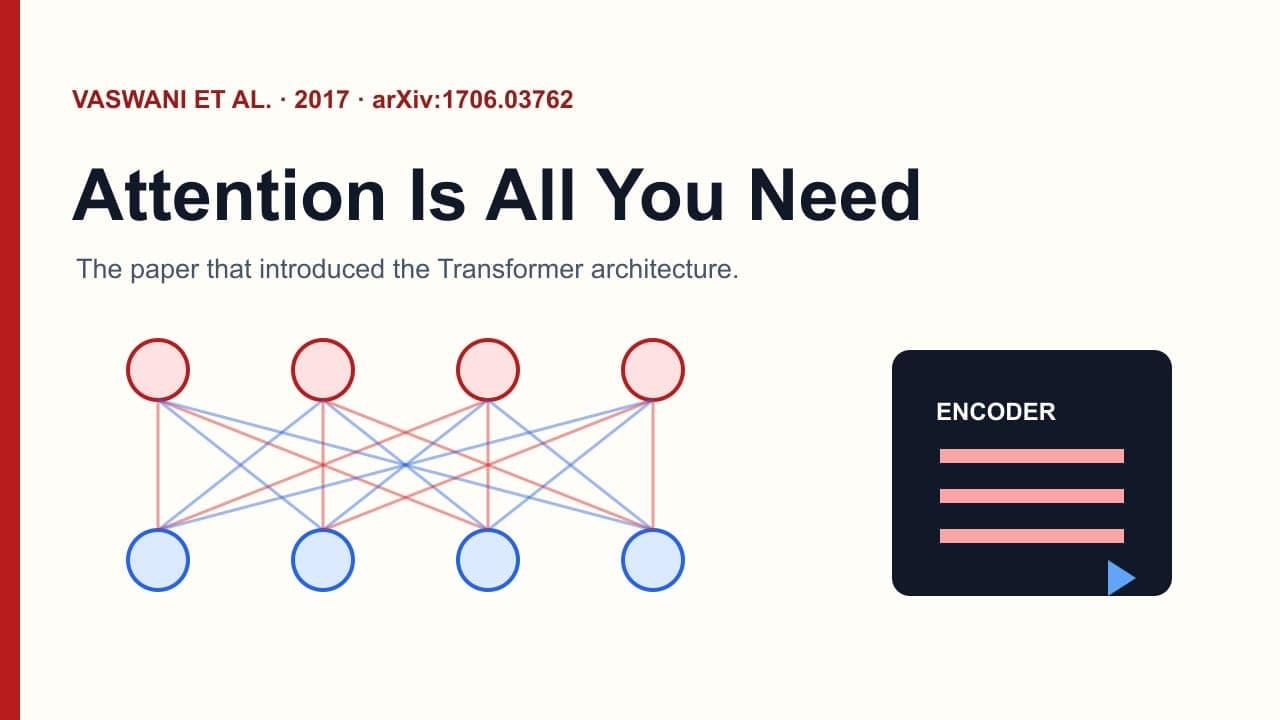
Classic reading
Attention Is All You Need
Read the abstract and architecture figure first; annotate what information flows between tokens.
Open original source
Course
AI Agents Course
Before using a framework, write down one tool contract and the exact state an agent is allowed to change.
Open original source