
Memory and State Management for Agents
Decide what an agent may remember, where it is stored, how it expires, and how a user can inspect or delete it.
Learning objectives
- Distinguish run state, conversation history, user profile, and knowledge retrieval
- Apply retention and deletion rules to agent memory
- Prevent stale memory from overriding current evidence
ToolDix original visual
Frame
Name the outcome and constraints.
Build
Try one bounded workflow.
Review
Keep evidence, revise, and share.
Four different things called memory
Run state belongs to one execution. Conversation history is a bounded interaction record. User preferences are durable but editable profile data. Knowledge retrieval is external evidence, not memory. Model each separately; mixing them creates privacy and correctness failures.
Retention is a product decision
Set a purpose, owner, TTL, access rule, deletion mechanism, and audit record for each stored field. Do not retain raw sensitive prompts merely because they might improve future answers. A user should be able to understand what was remembered and correct it.
Stale state
Attach timestamps and provenance to durable facts. Current task input and fresh retrieved evidence should outrank old summaries. When sources conflict, surface the conflict rather than silently choosing the most convenient memory.
Practice: memory table
Create a table listing every state field in your agent. Mark its scope, sensitivity, retention period, update path, and deletion path. Remove every field without a clear product purpose.
Common mistake
Do not use a long conversation transcript as a database.
Sources and license context
These references informed the lesson. ToolDix adds its own explanation, workflow, and practice rather than reproducing source material.
- LangGraph Academy (Course terms apply)
Take it further
Use a primary source to deepen this lesson.
Each recommendation is a direct link to the publisher or author. The study prompt is ToolDix editorial guidance, not copied course content.
Hands-on lab
LLM Course
Complete the pipeline exercise, then write down what information disappears when text becomes tokens.
Open original source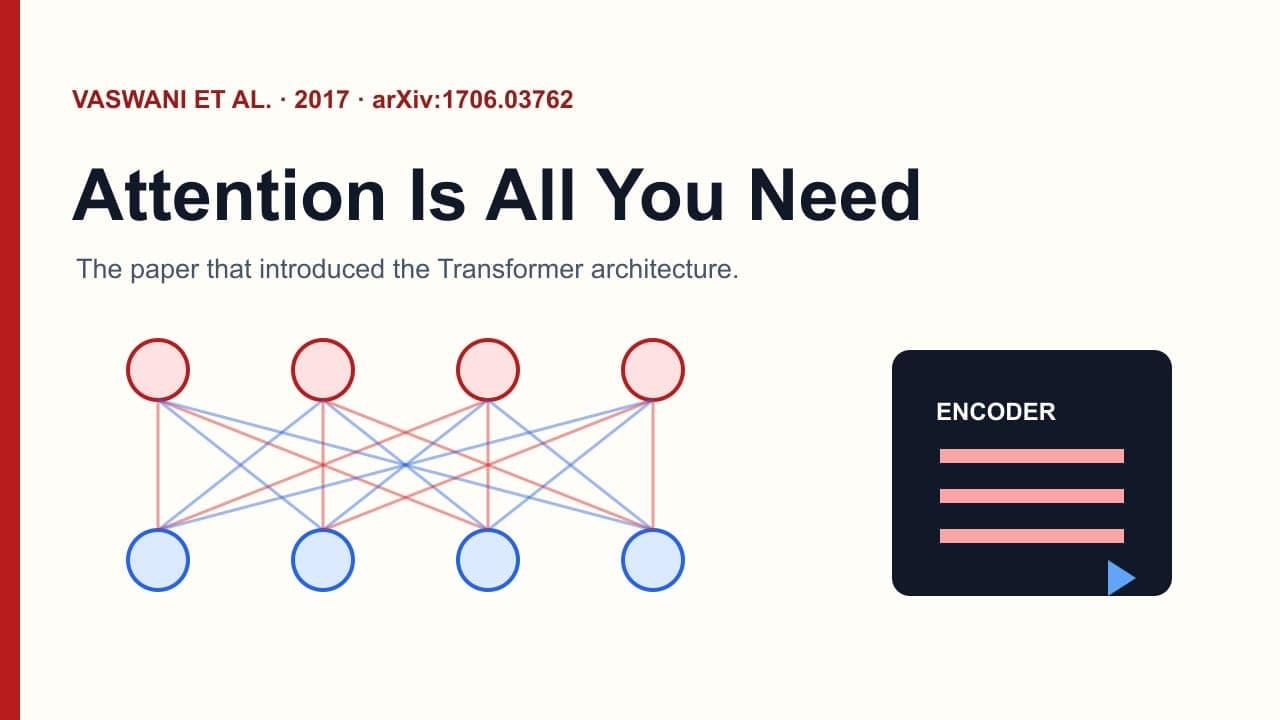
Classic reading
Attention Is All You Need
Read the abstract and architecture figure first; annotate what information flows between tokens.
Open original source
Course
AI Agents Course
Before using a framework, write down one tool contract and the exact state an agent is allowed to change.
Open original source