
AI Agents Foundations: Build a Bounded Research Agent
Build a small research agent with a read-only tool, explicit state, human approval, and evidence-based evaluation.
Learning objectives
- Define an agent boundary before selecting a framework
- Design a tool contract that is safe to test
- Evaluate traces instead of trusting a fluent answer
ToolDix original visual
Frame
Name the outcome and constraints.
Build
Try one bounded workflow.
Review
Keep evidence, revise, and share.
The project
Build an agent that answers a research question from a fixed list of approved documents. It may search document titles and return citations. It must not browse the web, send messages, change files, or infer facts that the tool did not return.
Step 1: write the contract
Define input, permitted tools, state, output, and stop conditions. A useful first contract is: question in, up to three document lookups, answer with quoted document identifiers, then stop. State should record the question, tool calls, observations, and final answer separately.
Step 2: implement one read-only tool
Use a function such as search_documents(query) that returns a small typed result. Reject empty queries and cap results. The agent receives tool output, not direct database access. This keeps both testing and later permission review manageable.
Step 3: add a human checkpoint
Before any future write action, present the proposed action, affected target, and reason. For this first project, the checkpoint always stops the agent after its answer. A human can inspect the trace and decide whether the contract was followed.
Practice: evaluate five cases
Create five questions: two answerable, one ambiguous, one with no supporting document, and one instruction-injection attempt. Record whether the agent cited its evidence, stopped within its tool budget, and refused unsupported claims.
Common mistake
Do not call a multi-step loop an agent merely because it has a prompt. The useful distinction is controlled state plus permitted actions plus evidence you can inspect.
Sources and license context
These references informed the lesson. ToolDix adds its own explanation, workflow, and practice rather than reproducing source material.
- Hugging Face AI Agents Course (Course terms apply)
- Building Effective Agents (Publisher terms apply)
Take it further
Use a primary source to deepen this lesson.
Each recommendation is a direct link to the publisher or author. The study prompt is ToolDix editorial guidance, not copied course content.
Hands-on lab
LLM Course
Complete the pipeline exercise, then write down what information disappears when text becomes tokens.
Open original source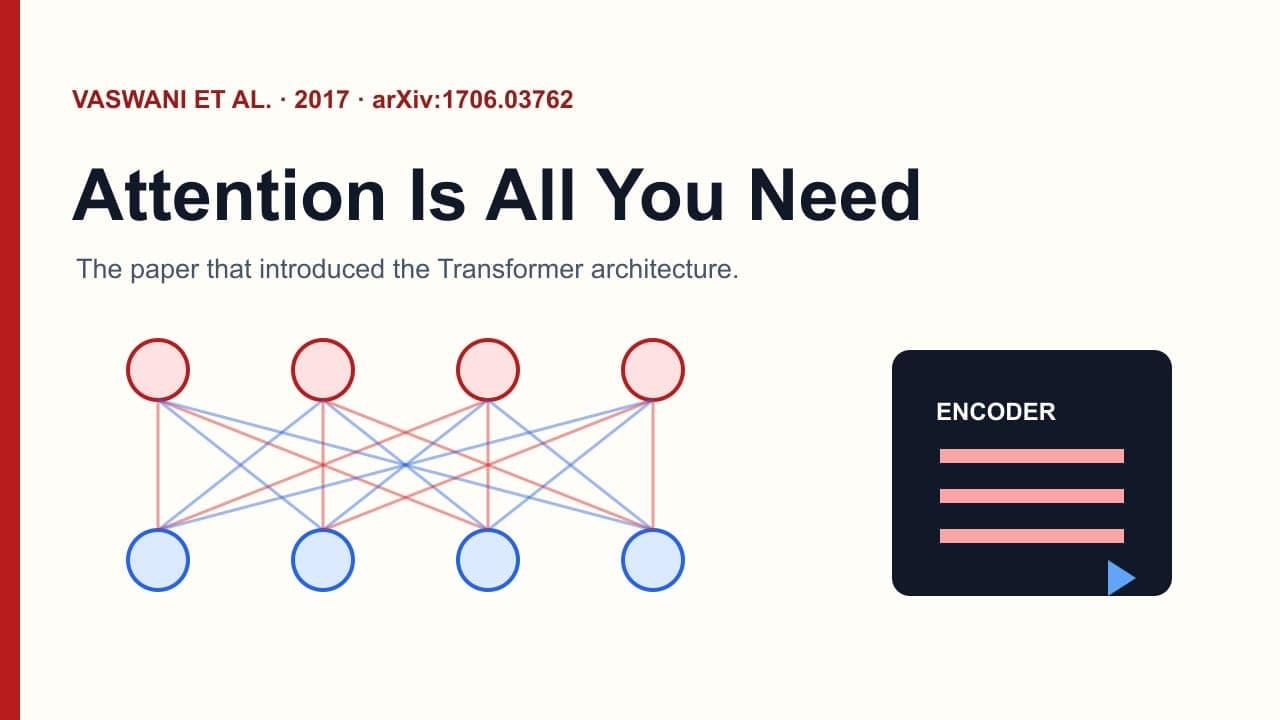
Classic reading
Attention Is All You Need
Read the abstract and architecture figure first; annotate what information flows between tokens.
Open original source
Course
AI Agents Course
Before using a framework, write down one tool contract and the exact state an agent is allowed to change.
Open original source