
Retrieval, RAG, and Citation Discipline
Build a retrieval layer that returns traceable evidence instead of treating a vector search result as truth.
Learning objectives
- Explain chunking, embeddings, retrieval, and reranking
- Design citation and abstention behavior for RAG answers
- Evaluate retrieval separately from generated prose
ToolDix original visual
Frame
Name the outcome and constraints.
Build
Try one bounded workflow.
Review
Keep evidence, revise, and share.
A RAG pipeline has two jobs
First retrieve relevant evidence; then answer only from that evidence. Chunk size, overlap, metadata, embedding model, filter policy, retrieval depth, and reranking each affect recall and precision. Do not debug them by looking only at final prose.
Evidence-first answers
Persist document ID, title, section, version, and retrieval score with every excerpt. Make the model cite these IDs. If evidence is missing or conflicting, the product should say so and ask a narrower question instead of fabricating a confident answer.
Evaluation set
Create questions with known sources, deliberately absent answers, ambiguous wording, outdated versions, and adversarial instructions in a document. Measure retrieval recall, citation correctness, unsupported-claim rate, and refusal quality separately.
Practice: source card
For ten documents, create metadata cards with owner, date, access level, retention policy, and update source. Test that a user cannot retrieve a document outside their permission scope.
Common mistake
A high similarity score is not proof that a passage supports an answer.
Sources and license context
These references informed the lesson. ToolDix adds its own explanation, workflow, and practice rather than reproducing source material.
- OpenAI Cookbook (OpenAI terms apply)
Take it further
Use a primary source to deepen this lesson.
Each recommendation is a direct link to the publisher or author. The study prompt is ToolDix editorial guidance, not copied course content.
Hands-on lab
LLM Course
Complete the pipeline exercise, then write down what information disappears when text becomes tokens.
Open original source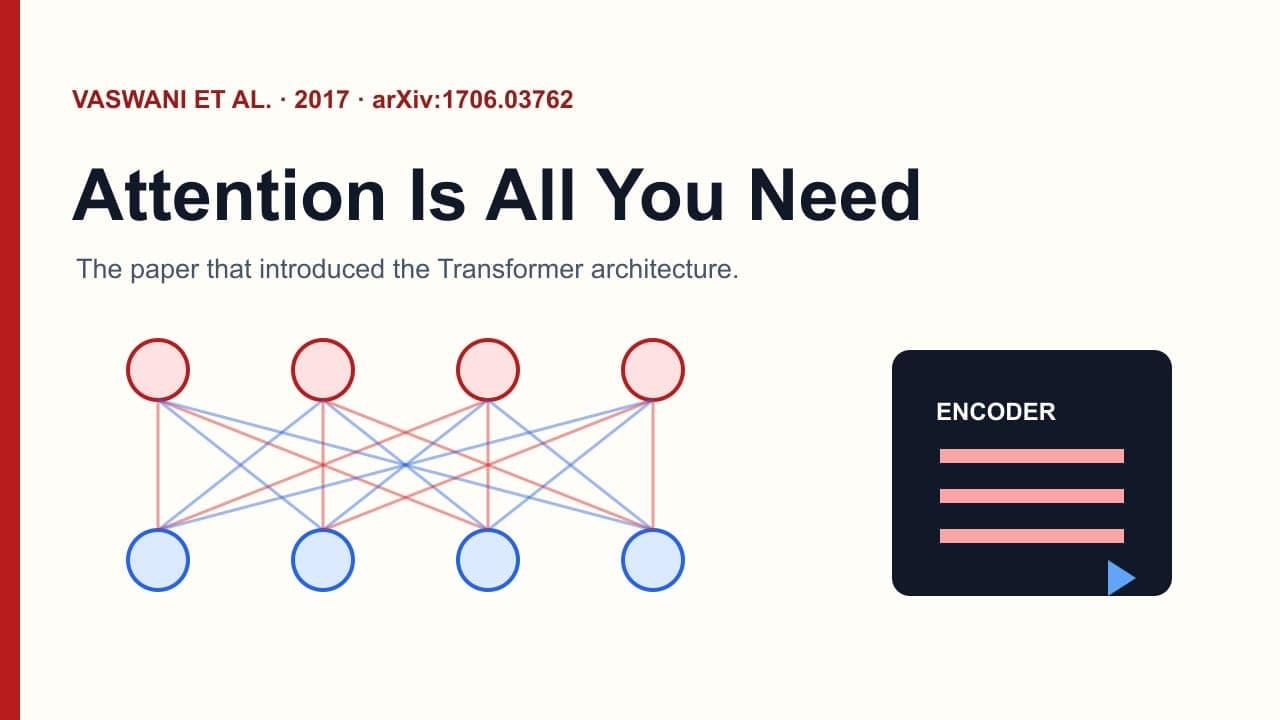
Classic reading
Attention Is All You Need
Read the abstract and architecture figure first; annotate what information flows between tokens.
Open original source
Course
AI Agents Course
Before using a framework, write down one tool contract and the exact state an agent is allowed to change.
Open original source