
Agent Context, Planning, and Tool Contracts
Design the three operational layers that make an agent useful: scoped context, explicit plans, and typed tool contracts.
Learning objectives
- Separate instructions, working state, and evidence in agent context
- Choose when planning is useful and when it adds unnecessary latency
- Specify typed tool inputs, outputs, errors, and authorization
ToolDix original visual
Frame
Name the outcome and constraints.
Build
Try one bounded workflow.
Review
Keep evidence, revise, and share.
Context is a budget
An agent context contains durable instructions, current task state, retrieved evidence, tool results, and sometimes prior conversation. Treat each as a separate field. Keep untrusted user text and external content clearly marked so they cannot silently become instructions.
Plans are hypotheses
Use a plan when the work has dependencies or costly actions. A plan should name a goal, assumptions, steps, stopping rule, and evidence for completion. For a one-tool lookup, planning is usually unnecessary; for a multi-source report, it makes review possible.
Tool contracts
Every tool needs a schema, permission boundary, timeout, idempotency behavior, and error vocabulary. A safe search tool returns structured snippets and source IDs. A risky tool such as send_email should require a separate approval token created by application code.
Practice: contract review
Write a JSON-like contract for create_ticket. Include required fields, allowed priority values, duplicate behavior, and errors. Then test a malformed call, an unauthorized call, a timeout, and a retry.
Common mistake
Never place API credentials, authorization decisions, or unrestricted shell access inside a prompt.
Sources and license context
These references informed the lesson. ToolDix adds its own explanation, workflow, and practice rather than reproducing source material.
- Hugging Face AI Agents Course (Course terms apply)
Take it further
Use a primary source to deepen this lesson.
Each recommendation is a direct link to the publisher or author. The study prompt is ToolDix editorial guidance, not copied course content.
Hands-on lab
LLM Course
Complete the pipeline exercise, then write down what information disappears when text becomes tokens.
Open original source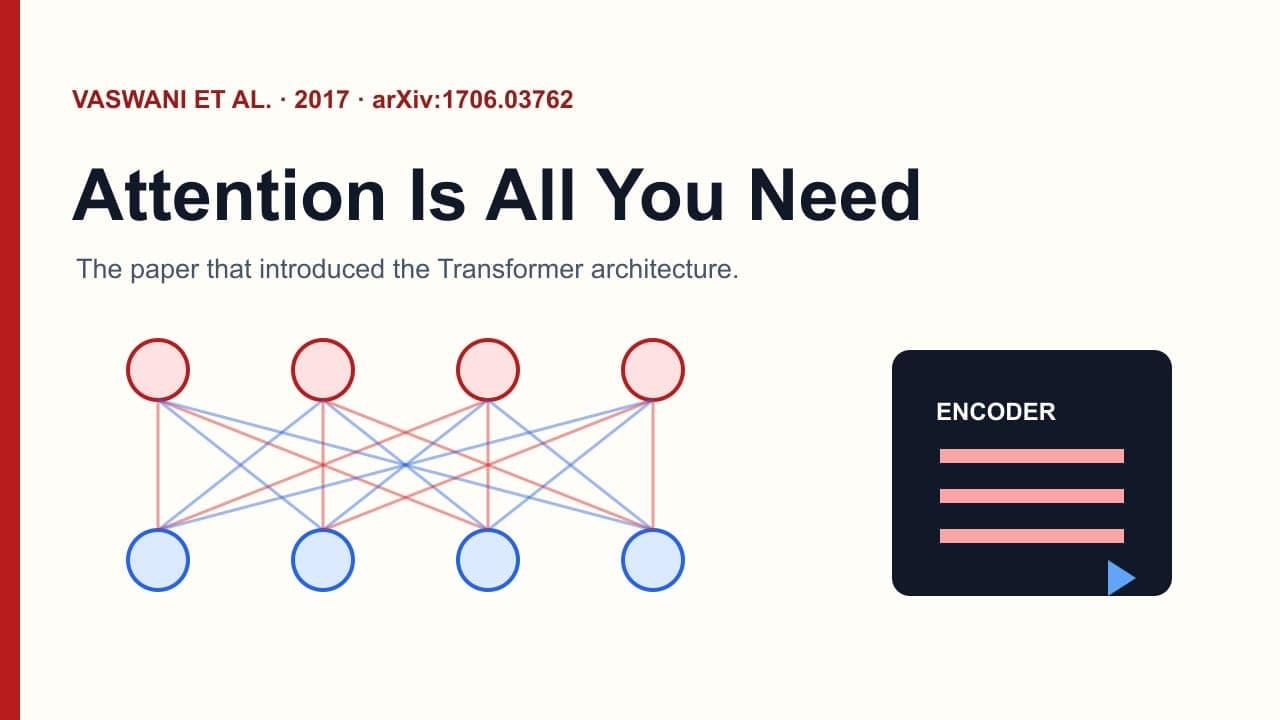
Classic reading
Attention Is All You Need
Read the abstract and architecture figure first; annotate what information flows between tokens.
Open original source
Course
AI Agents Course
Before using a framework, write down one tool contract and the exact state an agent is allowed to change.
Open original source